October 16, 2025• 9 min read
How to Budget & Plan a PR Campaign for Startups (Including Press Distribution Costs)
Written by: Grant Oganyan
- How to Budget & Plan a PR Campaign for Startups (Including Press Distribution Costs)
- PR as a Growth Investment: How Smart Startups Budget for Buzz
- The High-Growth Accelerator: When PR Becomes a Planned Deficit
- Building a PR Machine: Where the Smart Money Goes
- The Real Price of “Free” Press
- Content That Pays for Itself
- The Distribution Challenge: Reach Smarter, Spend Smarter
- The Strategic Lever: Guaranteed Placement Platforms
- Crunching the Numbers: PRNEWS.IO vs. Traditional PR
- Final Campaign Checklist: Make Every PR Move Count
PR isn’t optional - it’s the growth engine. Learn how startups can replace cold pitching with modern PR distribution for guaranteed media coverage and scalable visibility.

Let’s be real — treating PR like a “nice-to-have” line item on your budget spreadsheet is like skipping leg day. Sure, you save some energy now, but you’ll regret it when it’s time to sprint.
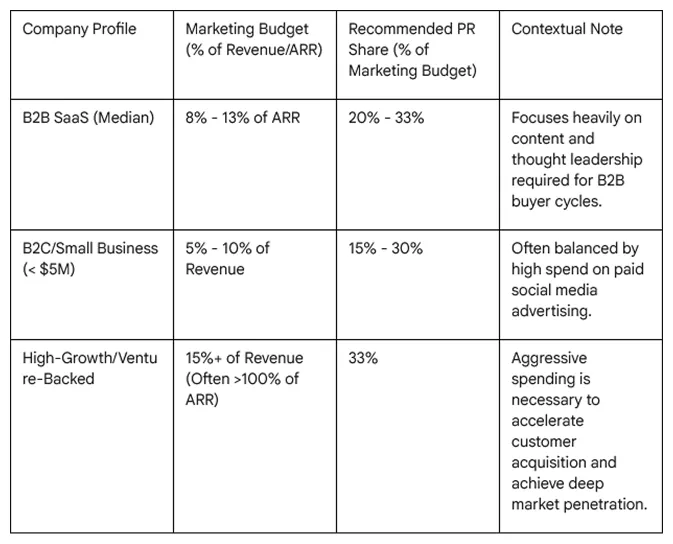
For startups, PR isn’t an expense to trim — it’s an investment in credibility, visibility, and momentum. The kind that makes investors lean in and potential customers hit “book a demo.” High-growth companies know this; that’s why many of them pour 15% (or more!) of their annual revenue into marketing, with a healthy slice — around one-third — going straight to PR. Because when your story lands in the right places, so does your next round of funding.
Now, for small teams, the real killer isn’t the cost of media placement — it’s time. Endless pitching, follow-ups, and “circling back” emails can drain even the most caffeinated founder. The smarter move? Shift your resources from the unpredictable hustle of cold pitching toward something that’s actually measurable, scalable, and kind to your calendar.
That’s where modern PR distribution comes in. Forget those dusty, overpriced newswire services and the mystery invoices from old-school agencies. New-gen platforms like PRNEWS.IO flip the script. You get guaranteed media placements, transparent pricing, and zero surprises. No guesswork, no begging for coverage — just consistent visibility and predictable spend.
Because let’s face it — startups don’t need more chaos. They need levers that move fast, cost less, and actually work.
PR as a Growth Investment: How Smart Startups Budget for Buzz
If you want your startup to be taken seriously, you’ve got to spend like you mean it. And no — that doesn’t mean burning cash. It means understanding where every dollar actually moves the needle.
Let’s start with the basics: your marketing budget. The big kids (aka established B2C companies) usually set aside around 5–10% of their gross revenue for marketing. They’re running big, loud campaigns across multiple channels — it adds up.
On the B2B side, especially in SaaS, the sweet spot tends to hover around 8–13% of Annual Recurring Revenue (ARR). It’s all about keeping a steady flow of leads while staying efficient enough to please investors.
But startups playing the go-big-or-go-home game? They crank that number up. If you’re chasing market dominance, prepping for an IPO, or eyeing your next funding round, you’re looking at roughly 15% of revenue toward marketing — sometimes more. That’s the territory of high-growth, venture-backed teams who’d rather sprint than stroll.
Now, once that total is on the table, it’s time to slice the pie strategically. The golden ratio for high-growth teams looks something like this:
33% Advertising (Paid) – get those clicks and eyeballs.
33% Content Marketing – tell stories that make people care.
33% Public Relations – build credibility that makes both of the above actually work.
PR isn’t the sidekick here — it’s the amplifier. It’s what turns your content into conversation and your ads into authority. Treat it like an afterthought, and you’ll sound like every other startup shouting into the void. Treat it like a growth engine, and you’ll build the kind of brand investors brag about.
The High-Growth Accelerator: When PR Becomes a Planned Deficit
In the world of venture-backed startups, “profitability” isn’t the first word on the whiteboard — “valuation” is. When external funding enters the chat, the financial game shifts from balancing the books to building momentum that multiplies future worth.
Let’s put some numbers to it. Equity-backed SaaS companies often spend around 107% of their Annual Recurring Revenue (ARR) on operating expenses. Yes, you read that right — they’re technically spending more than they make. But that’s not recklessness; it’s strategy. That deliberate deficit fuels aggressive investment in Sales and Marketing — the engines that turn potential into market dominance.
For these high-velocity players, dropping 15–20% (or more) of total revenue on marketing isn’t overkill. It’s the cost of acceleration. Why? Because every investor in the room is thinking in multiples, not margins. Venture capitalists use the Venture Capital Method — fancy term for estimating what your startup could sell for down the road (the “Terminal Value”) and whether it can deliver that dream 10x ROI they love to quote.
Here’s where PR quietly takes the driver’s seat. Thought leadership, consistent media visibility, and brand credibility aren’t just vanity metrics — they’re assets that directly shape those revenue multiples. When a startup looks credible, investors see stability. When it owns the conversation, acquirers see value.
So for a venture-backed team, the real budget question isn’t “Can we afford to spend this much on PR?” — it’s “Can we afford not to?” If your goal is to hit that high-return exit, every strategic PR dollar becomes part of your planned (and very intentional) deficit — an investment in the story that sells your future.
Building a PR Machine: Where the Smart Money Goes
A great PR campaign isn’t just about landing a headline — it’s about everything that happens before (and after) the story hits the wire. The secret? Balance.
Industry data shows that successful campaigns spread their resources across five essential gears, each one keeping the whole engine running smoothly:
Media Relations (Pitching & Outreach): 30–40% – Crafting the story, building relationships, and getting your message in front of the right journalists.
Content Creation (Assets, Releases, Reports): 20–25% – All the materials that make your story irresistible — from press releases to polished visuals and founder quotes that actually sound human.
Digital PR (SEO, Link Building, Online Presence): 15–20% – Because authority today is built as much on Google as it is in Forbes.
Events & Speaking Engagements: 10–15% – Putting your people where the spotlight shines — panels, conferences, podcasts, you name it.
Measurement & Analytics: 5–10% – Tracking what worked, what didn’t, and where to double down next time.
This breakdown reveals an often-overlooked truth: the story-building process eats most of the budget. Media placement is just the final flourish — the mic drop at the end of a long performance. Without the strategy, content, and consistency behind it, even the best press release falls flat.
So, the next time someone asks, “Why does PR cost so much?”, you’ll have a simple answer: because doing it right means doing everything — not just the headline.
The Real Price of “Free” Press
In PR, the biggest cost isn’t media — it’s people. Labor can chew up 40–60% of total PR spend, and for startups, that’s a serious drain on flexibility.
An in-house PR hire? Around $50K a year before overhead. An agency? $10K–$20K a month — and that’s mid-range. Even freelancers run $100–$150/hour, with a single press pitch easily clocking 15 hours of work. That’s $2,000+ spent on one story — with no guarantee it ever lands.
The result: traditional earned media often burns time, not traction. For lean teams, that labor cost is the real bottleneck, leaving less room for the tools and content that actually scale.
Content That Pays for Itself
Quality content is where most PR money should go — roughly 20–25% of the total budget. It’s not cheap (think $4K–$10K/month), but it’s efficient. Content-driven campaigns cost 62% less over time and drive far more traffic.
Smart teams don’t do it all in-house. About 55% of B2C marketers outsource to freelancers or agencies, tapping specialists for technical or legal-heavy work. The result? Expert-level output without the full-time salary drag.
Because in PR, flexibility isn’t just nice — it’s the difference between staying lean and burning out.
The Distribution Challenge: Reach Smarter, Spend Smarter
When it comes to PR distribution, startups face the classic trade-off: credibility vs. control.
Earned Media — the “organic” gold standard — brings unbeatable trust because it’s based on genuine third-party validation. But it’s slow, unpredictable, and brutally labor-intensive. You can spend weeks pitching, only to see your story die in an inbox.
Paid or Sponsored Media, on the other hand, gives you what startups crave most — speed and control. You pick the outlet, lock the timing, and know exactly what’s going live. The catch? It costs more upfront and, if done poorly, can feel too commercial, dulling your brand’s credibility.
Traditional newswire services like PR Newswire or Business Wire promise mass visibility but deliver mass inefficiency. By the time you’ve added up membership fees, per-word surcharges, and multimedia add-ons, a single release can run $3,000–$4,000 — for content most journalists won’t even open. In other words, high spend, low return.
Here’s the smarter play: trade variable labor risk for fixed, guaranteed reach.
If one earned media pitch costs you ~$2,250 in time, redirecting even $300 of that into a guaranteed placement platform instantly flips the equation. Your visibility becomes predictable, your risk drops, and your team gets precious time back.
That saved bandwidth can then power what really drives authority — better content, sharper journalist relationships, and data-backed storytelling. Because the goal isn’t to spend less — it’s to spend smarter, turning every PR dollar into measurable momentum.
The Strategic Lever: Guaranteed Placement Platforms
For startups, unpredictable PR results are more than frustrating — they’re expensive. Platforms like PRNEWS.IO flip that script by turning uncertainty into strategy. Acting as a sponsored content marketplace, it lets brands publish stories and expert commentary across 100,000+ media outlets worldwide — no cold pitching required.
The magic here is predictability. PRNEWS.IO runs on a simple pay-as-you-go model, with transparent pricing that starts at just $5.96 per article. That means no retainers, no hidden fees, and no guesswork. For small, globally minded teams, it’s a direct route to guaranteed visibility in 175+ countries — scalable, measurable, and fast.
Crunching the Numbers: PRNEWS.IO vs. Traditional PR
Here’s the math founders love: a single traditional press-release wire can cost $3,000–$4,000, with no promise of pickup. PRNEWS.IO, on the other hand, offers guaranteed placements at a fraction of that price.
Instead of pouring thousands into uncertain “maybe they’ll notice” distribution, startups can buy certainty — fixed costs, measurable results, and lasting value. Each published piece also delivers SEO gains through backlinks from high-authority domains, meaning your spend keeps working long after the article goes live.
This is pure efficiency arbitrage: less guesswork, more traction.
Of course, not all sponsored content hits right. The Paid Media Paradox is real — push too hard, and your message can feel like an ad, eroding trust instead of building it.
The fix? Reinvest the time you save from manual pitching into content quality. Make your articles educational, thought-driven, and editorially aligned with the outlets you’re in. Done well, sponsored content isn’t a shortcut — it’s a strategic amplifier that boosts both brand authority and SEO without compromising authenticity.
Because in modern PR, credibility isn’t bought — it’s built smarter.
Final Campaign Checklist: Make Every PR Move Count
PR isn’t a one-and-done stunt—it’s a marathon of consistent execution, smart choices, and measurable results. Before you spend a single hour or dollar, run each activity through this checklist:
Message that sticks: Your story should be clear, confident, and packed with a unique point of view that makes your brand impossible to ignore.
Distribution with purpose: Decide upfront whether you’re prioritizing cost, speed, or personalization, and make sure your outreach reflects that choice.
ROI in focus: Every spend—whether it’s high-touch pitching or guaranteed placements—needs to connect to a tangible metric: CAC, Marketing-Sourced Pipeline, or Share of Voice. No guesswork, no wasted effort—just measurable impact.
Treat this as your final sanity check: if it doesn’t advance your strategic goals, it doesn’t make the cut. Because in startup PR, efficiency and outcomes beat effort every time.
Create an online press kit
Make it easier for anyone to learn about your product with Pressdeck